
News Agencies Call for Stronger Protection of Trusted Information at EANA Debate in Brussels
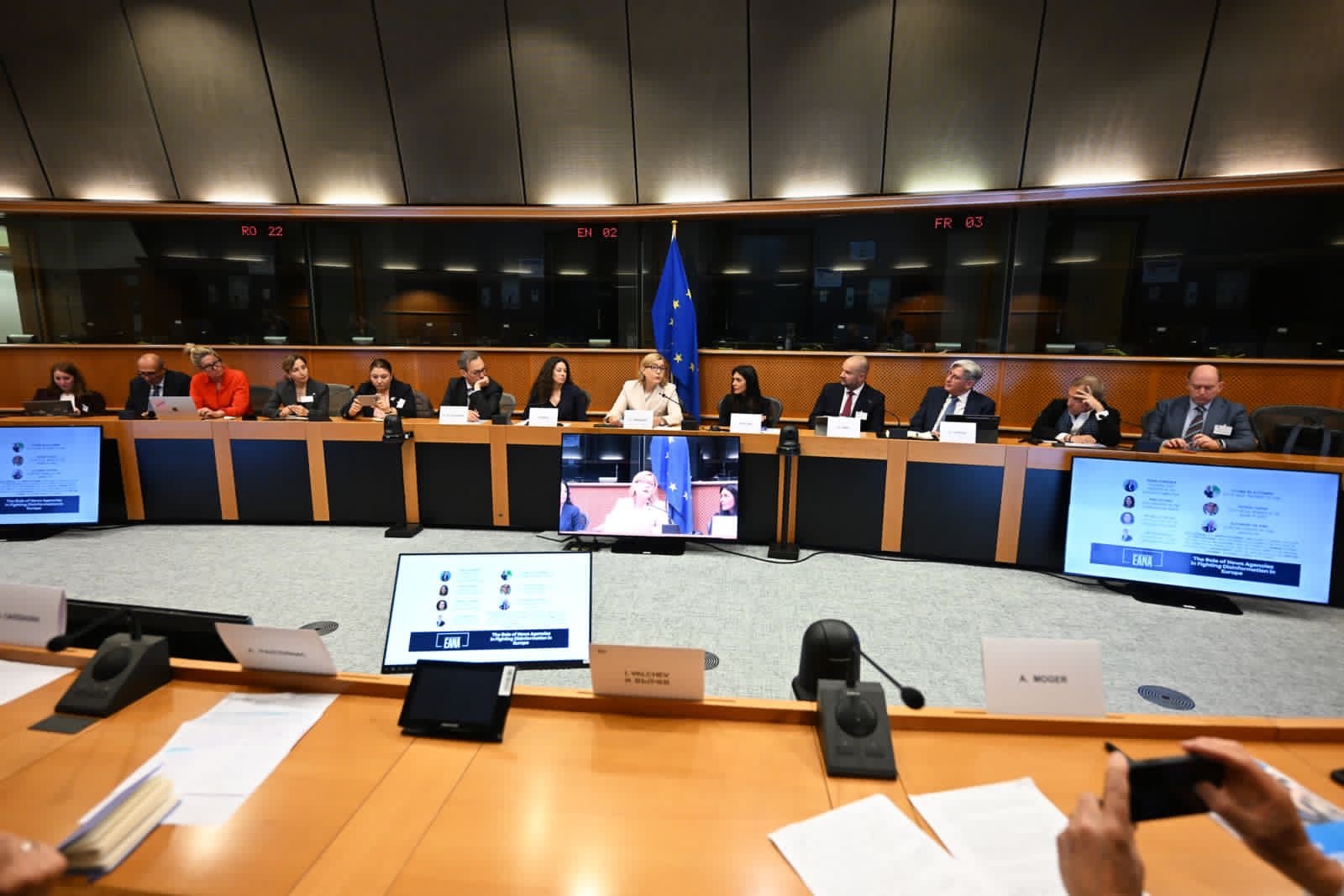
The European Alliance of News Agencies (EANA) gathered top European policymakers, media leaders, news agencies and industry representatives at the European Parliament in Brussels for the debate “The Role of News Agencies in Fighting Disinformation in Europe”, focused on the growing threats to democracy posed by disinformation, AI-generated manipulation and the weakening of sustainable journalism models.
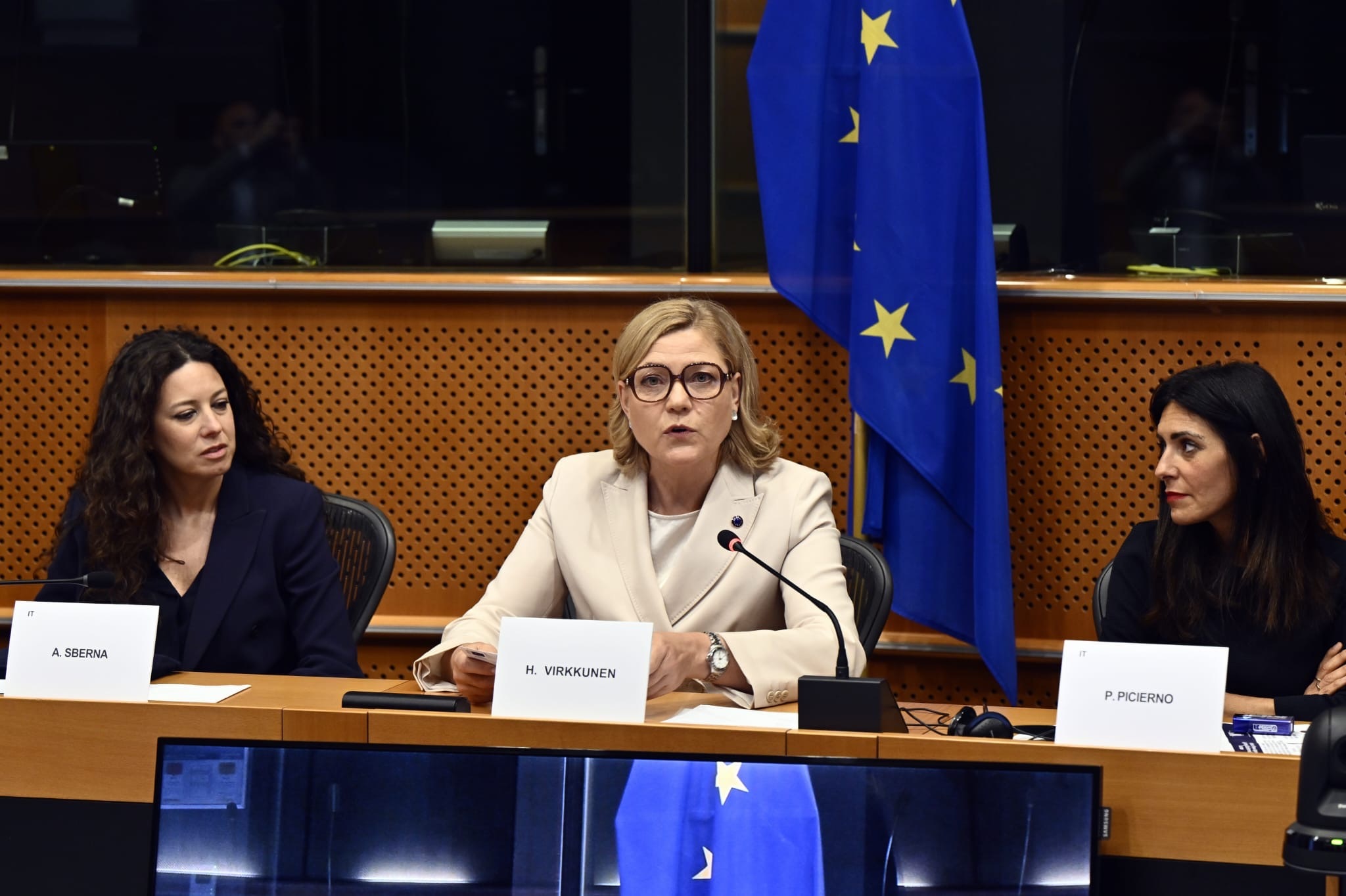
Hosted by European Parliament Vice Presidents Pina Picierno and Antonella Sberna, the event featured a guest keynote by Henna Virkkunen, Executive Vice-President of the European Commission for Technological Sovereignty, Security and Democracy, and European Commissioner for Digital and Frontier Technologies, and interventions from representatives of members of the European Parliament, European media associations, news agencies, and other stakeholders.
Opening the debate, EANA President and CEO of ANSA Stefano De Alessandri warned that “if we let disinformation actors win, we lose control of democracy,” stressing that news agencies are “the backbone of Europe’s information system” and that “truth does not scale by accident - it scales through investment.” He also emphasized that AI systems “cannot be built on unpaid journalism” and called copyright “a strategic asset for European democracy.”
EP Vice President Pina Picierno described disinformation as “a weapon” used “to confuse, divide and weaken democracies,” adding that “facts do matter because democracy can only work when citizens have access to truthful information.” She underlined the importance of independent news agencies, calling them “the backbone of the information system.”
“Look at what Russia has done and continues to do. Just as an example, not long ago, when Vladimir Solovyov, a sanctioned Russian propagandist, a man who the very day after the invasion of Ukraine was on television celebrating the possibility of nuclear war, was about to be given a platform on Italian public television, I said no. This is not about freedom of speech. Freedom of speech is a value. But the propaganda machine is not journalism. A megaphone for an authoritarian regime is not a voice that the public broadcasting must amplify. And I am proud that in that case, the right decision was made. But let us be honest. One battle won is not a war won. The challenge is crucial, and this is why the role of press agencies, your role of professional, independent press agencies is absolutely central to our response.”, Pina Picierno also said.
EP Vice President Antonella Sberna highlighted the importance of verified information in an increasingly AI-driven environment, stating that “when news agencies produce something, we can trust it,” and stressed the need “to create an ecosystem where they can continue to work under sustainable conditions.”
“In Italy we say, okay, it's said by ANSA, so it's true. (...) If ANSA said something, and the same of course in other countries, we assume that it's something that is purified, is created correctly, and is processed by controllers before getting out. It's ANSA in Italy, but also the other news agencies in other countries. Sometimes they are not the first one, but we know that when you produce something, we can trust it. And I think the effort that we have to do today is this: to put together the European Commission, the European Parliament, (...) and all people who want to maintain this kind of system alive - we have to create an ecosystem where they can continue to work, but at conditions that could be helpful for the public good.”, Antonella Sberna said.
Vice President of the European Parliament Victor Negrescu addressed participants through a video message, stating: “News agencies play a critical role: you are one of the most trustworthy sources in the information chain. You verify, you provide facts when the worst noise is dominating the public space. This responsibility is enormous. And I want to thank you for that. (...) A resilient democracy is one where people can distinguish tools from distortion. Let me be very clear. This is a shared responsibility. European institutions, national governments, national journalists, and news agencies must act together, not in parallel, but in partnership. Because in the end, this is not only about countering disinformation. This is about defending democracy itself.”
Patrick Lacroix, CEO of Belga and EANA Board Member, argued that news agencies should be formally recognized “as Europe’s critical information infrastructure,” warning that “a healthy democracy requires an unpolluted factual data grid to power its decisions.” He also called for stronger copyright frameworks and mandatory transparency regarding AI training data.
MEP Ivaylo Valchev, member of the CULT Committee, emphasized that “professional journalism must remain a compass for truth” in an environment where information increasingly circulates without verification. He also warned against selective fact-checking and stressed the importance of transparency and accountability across the information ecosystem.
Andreea Pastarnac, the Romanian ambassador to Belgium, stressed that the Romanian community in Belgium is exposed to a lot of disinformation and that it’s difficult from trustworthy news to reach them.
MEP Stefano Cavedagna, Vice Chair of the European Democracy Shield Committee, noted that “the quality of information represents one of the essential conditions for the proper functioning of democracy,” adding that news agencies remain “a point of reference for the entire media system.”
Christophe-Walter Petit, Agence France-Presse general counsel, stressed the urgent need for effective enforcement of neighboring rights legislation and fair compensation mechanisms for journalistic content used by major digital platforms and AI systems.
Stig Orskov, CEO of the WAN-IFRA, underlined that publishers and news agencies “are together in this fight,” adding that trusted media organizations differ fundamentally from social media platforms because “they take responsibility for what they publish.” He also raised a discussion on anonymity online, as a factor that favors the spread of disinformation.
Andrew Moger, the CEO of the News Media Coalition, highlighted the importance of “primary source journalism,” describing it as “the raw material of truth” and “one of the most vital weapons against disinformation.”
Getty Images VP and Corporate Counsel Jonathan Lockwood warned that “the unauthorized use of editorial images and videos for training AI weakens the economic basis for high-quality news coverage,” while emphasizing that trusted visual journalism is increasingly critical in an era of AI-generated synthetic content.
Claudia Nicolae, Director General of AGERPRES (Romania), stressed that “fact-checking is more expensive than disinformation” and argued that journalism must continue focusing on producing and promoting verified facts despite mounting technological challenges.
Aimilios Perdikaris, member of the Board of EANA and representative of ANA-MPA news agency from Greece, focused strongly on the institutional role of news agencies as guardians of factual information and raised several policy questions to Henna Virkkunen about copyright, media literacy and social media regulation. His core message was that news agencies occupy a uniquely sensitive position within the information ecosystem because they are the main distributors of news to the wider media landscape.
Executive Vice President of the European Commission Henna Virkkunen reaffirmed the Commission’s commitment to protecting independent journalism and democratic resilience, stressing that “free and independent media are a cornerstone of our democracies.” She warned that quality journalism is facing growing economic pressure due to technological and market developments, particularly in the age of generative AI, and emphasized that “news media content is particularly valuable for AI providers, but also for our democratic society as a whole.” Highlighting the importance of fair compensation and stronger copyright protections, she added that “the fight against disinformation is not only about removing false content - it’s about ensuring that true, verified and accountable information can thrive in our society.”
The debate concluded with broad agreement on the need for closer cooperation between European institutions, news media organizations and technology actors in order to strengthen trusted information ecosystems, ensure fair compensation for journalistic content, and defend democratic societies against coordinated disinformation campaigns.
The event was organized by the European Alliance of News Agencies at the European Parliament in Brussels.
About EANA:
Founded in 1956, the European Alliance of News Agencies (EANA) unites 33 leading news agencies spanning across EU and non-EU countries. To secure a safe economic and legal environment for news agencies to operate in is one of EANA´s main concerns.
For media inquiries, please contact:
Alexandru Giboi
Secretary General, EANA
secretarygeneral@newsalliance.org